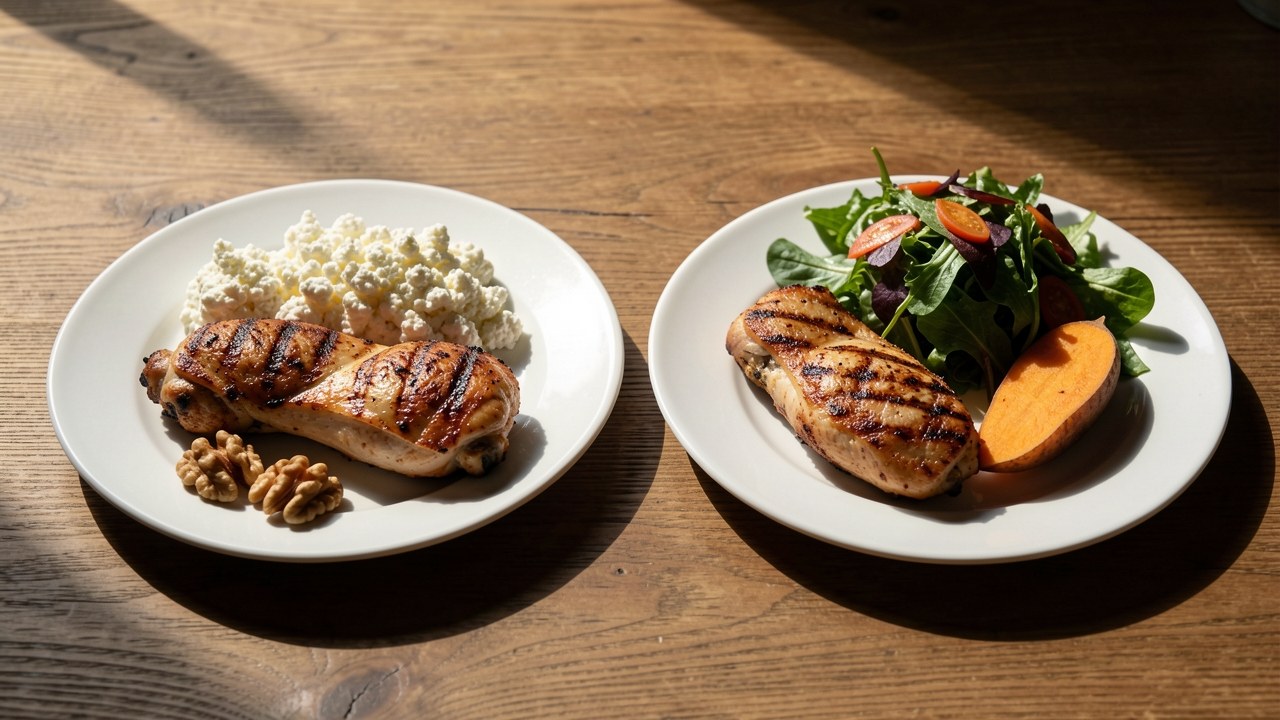
Understanding the Two Diets
The paleo diet and the keto diet are often mentioned together because both encourage whole, unprocessed foods and exclude grains, legumes, and processed products. Yet their underlying philosophies are quite different: paleo is built on the idea of mimicking ancestral eating patterns, while keto is designed to shift your metabolism into a state called ketosis.
If you are trying to choose between them, it helps to see what each one actually requires on your plate and in your daily routine.
Sources: Healthline, MyKetoCalcs, Virta Health
What is the keto diet?
The keto diet is a high-fat, moderate-protein, very low-carbohydrate eating plan. By keeping carbohydrate intake very low, your body runs out of its usual glucose fuel and begins breaking down fat into molecules called ketones. This metabolic shift is known as ketosis.
Originally developed in the 1920s as a treatment for epilepsy, keto has become popular more recently as a weight-loss and metabolic-health strategy. Adherence usually means tracking macronutrients to stay within a strict range: fat supplies roughly 70% to 80% of calories, protein about 20% to 25%, and carbohydrates just 5% to 10%. Most people need to keep carbs below roughly 50 grams per day to stay in ketosis.
- High-fat foods such as oils, butter, and fatty cuts of meat are staples.
- Full-fat dairy is generally permitted, including cheese, cream, and unsweetened yogurt.
- Most fruits and starchy vegetables are limited because of their carbohydrate content; berries are allowed in small amounts.
Sources: Healthline, MyKetoCalcs, Virta Health, Gene Food
What is the paleo diet?
The paleo diet is centered on eating whole, unprocessed foods that were available to early humans, according to its proponents. It eliminates grains, legumes, dairy, refined sugar, and processed foods. The focus is on food quality more than on hitting a specific macronutrient ratio.
Because paleo has no fixed macronutrient targets, the exact proportion of fat, protein, and carbohydrates can vary widely depending on food choices, goals, and activity level. One characterization is roughly 40% protein, 35% fat, and 25% carbohydrates, but that is not a rule and can change from person to person.
Unlike keto, paleo allows all fruits and starchy vegetables such as sweet potatoes, beets, and carrots. Natural sweeteners like raw honey and maple syrup are permitted in moderation, though refined sugar is out.
Sources: Healthline, MyKetoCalcs, Virta Health, Gene Food, U.S. News & World Report
Fat, protein, and carbohydrate ratios compared
The single biggest structural difference between the two diets is how much carbohydrate they allow and how much fat they require.
Keto is prescriptive: you need to keep carbs very low—typically below 50 grams daily—and you must get a large majority of calories from fat to maintain ketosis. Paleo sets no such targets; you can eat a higher or lower carbohydrate amount depending on how many starchy vegetables and fruits you include, as long as those foods come from allowed whole sources.
- Keto typical macronutrient ranges: 70–80% of calories from fat, 20–25% from protein, and 5–10% from carbohydrates.
- Paleo has no official ratio; macronutrient percentages vary by food selection and individual goals.
- Dairy is excluded on paleo but allowed on keto, which can make reaching keto’s high-fat target easier.
| Diet | Fat | Protein | Carbohydrates |
|---|---|---|---|
| Keto | 70–80% of calories | 20–25% of calories | 5–10% of calories (often under 50 g per day) |
| Paleo | Variable (about 35% in one common example) | Variable (about 40% in one common example) | Variable (about 25% in one common example) |
Sources: MyKetoCalcs, Gene Food, Bondi Meal Prep
restricted foods in each
Both diets cut out grains, legumes, and processed foods, but they diverge when it comes to dairy, added sugars, and certain carbohydrate-heavy plants.
Understanding these differences is essential because foods that are everyday staples on one plan could completely derail the other.
- Dairy: paleo excludes all dairy; keto allows full-fat dairy like butter, cream, and cheese.
- Added sugars: both exclude refined sugar, but paleo permits natural sweeteners like raw honey and maple syrup in moderation; keto excludes all added sugars, including natural ones, to keep carbs low.
- Starchy vegetables: paleo allows sweet potatoes, beets, carrots, and other starchy roots; keto restricts them to stay under the carbohydrate limit.
- Fruit: paleo allows all fruits, including higher-sugar options; keto restricts most fruits and allows only small portions of berries.
- Grains, legumes, and processed foods: both diets ban these categories.
Sources: Healthline, Acadiana Gastroenterology, Virta Health, Gene Food
Health effects and potential side effects
Short-term studies suggest that both diets can lead to weight loss and improvements in some metabolic markers, such as blood sugar and blood lipids. However, long-term evidence is limited for each.
Because paleo excludes dairy, there is a potential risk of calcium and vitamin D deficiency if non-dairy sources are not emphasized. On keto, the heavy restriction of carbohydrate-rich foods may lead to lower fiber intake and possible shortfalls of certain micronutrients.
People who switch to keto sometimes experience temporary side effects when first entering ketosis, commonly called the “keto flu.” Symptoms can include fatigue, headache, and nausea. Others may notice “keto breath” (a fruity or metallic smell) or a temporary skin rash. Paleo does not have a comparable metabolic transition, though cutting out entire food groups can still be challenging.
- Both diets show promise in short-term weight-loss trials, but results vary from person to person.
- Long-term safety and effectiveness have not been established for either diet.
- Paleo’s dairy exclusion calls for attention to calcium and vitamin D.
- Keto’s low-carb restriction may reduce fiber intake and requires careful food choices to maintain nutrient adequacy.
Sources: Healthline, Acadiana Gastroenterology, Forbes Health
adherence
Ease of sticking with a diet depends heavily on personal preferences, daily routines, and social environment. Keto demands precise tracking of carbohydrate grams and consistent attention to fat and protein targets. Many people find the need to measure portions and count net carbs burdensome, especially when eating out or traveling.
Paleo is often described as more flexible because you do not need to hit exact ratios. You can include a wide range of vegetables, fruits, and meats, and you rarely need to calculate percentages. However, dairy and legumes are off-limits, which can still complicate social meals and restaurant choices.
There is no universally “easier” diet; the right choice often depends on whether you prefer strict rules with clear structure or a looser set of food guidelines.
- Keto usually requires carbohydrate tracking and careful meal planning to maintain ketosis.
- Paleo offers flexibility in macronutrients but still demands avoiding dairy, grains, legumes, and processed ingredients.
- Social settings can be tricky on both plans, but keto’s strict carb limit may make impromptu eating harder.
Sources: Healthline, MyKetoCalcs, U.S. News & World Report
Which diet might suit different goals?
Choosing between paleo and keto should start with your primary goal and personal health context. If you want a structured metabolic shift, keto might be more aligned. If you prefer to clean up your eating without counting every gram, paleo could be a better fit.
Here are some common scenarios to think through.
- Weight loss: Both diets can support weight loss, especially in the short term. Keto may produce more rapid initial loss due to water weight, but paleo offers a less restrictive framework that some people maintain longer.
- Blood sugar management: Keto generally produces larger short-term reductions in blood sugar because it restricts carbohydrates so tightly. Paleo, while still low in processed carbs, allows more carbohydrate-containing foods.
- Long-term health: Neither diet has enough long-term data to claim superiority. Paleo’s emphasis on whole foods and lifestyle may be easier to sustain, while keto’s extreme carb restriction may be more difficult to maintain over months or years.
Sources: Healthline, U.S. News & World Report
Paleo vs. keto at a glance
The table below sums up the key differences you’ve read about. Use it as a quick reference when deciding which plan to explore further.
| Category | Paleo | Keto |
|---|---|---|
| Primary goal | Eliminate processed foods and mimic ancestral eating | Induce and maintain ketosis by restricting carbohydrates |
| Macronutrient focus | No strict ratio; flexible, often higher protein | Strict: high fat, moderate protein, very low carb |
| Carbohydrate intake | Variable; whole-food carbs allowed | Typically under 50 g/day |
| Dairy | Excluded | Full-fat allowed |
| Grains and legumes | Excluded | Excluded |
| Added sugars | Refined restricted; natural sweeteners in moderation | All excluded, including natural |
| Starchy vegetables | Allowed | Restricted |
| Fruit | All allowed | Most excluded; berries in small amounts |
| Potential risks | Calcium and vitamin D deficiency risk | Keto flu, nutrient shortfalls (fiber, micronutrients) |
Sources: Healthline, Acadiana Gastroenterology, MyKetoCalcs, Virta Health, Gene Food, Forbes Health
Making an informed choice
No single diet is right for everyone. Paleo may appeal if you want fewer rules and a stronger focus on whole-food quality. Keto might be attractive if you prefer clear targets and are interested in the metabolic effects of ketosis.
Before making a major dietary change, particularly if you have health conditions or take medication, talk with a qualified health care provider who can help you plan a nutritionally adequate approach.
This article is educational and not a substitute for professional medical guidance.
Frequently asked questions
Is keto a type of paleo?
No. While both diets eliminate grains, legumes, and processed foods, keto is defined by its strict carbohydrate restriction and high fat intake to achieve ketosis. Paleo does not require a specific macronutrient ratio and allows foods like starchy vegetables and natural sweeteners that are off-limits on keto. Keto also permits dairy, which paleo excludes. They are separate dietary approaches with distinct rules.
Sources: Healthline, MyKetoCalcsCan you do paleo and keto at the same time?
Yes, you can combine them by following paleo food choices (no grains, legumes, dairy, or processed foods) while also keeping carbohydrate intake low enough to stay in ketosis. This is sometimes called a “paleo-keto” or “keto-paleo” approach. However, it requires careful planning because many paleo staples, such as sweet potatoes and honey, are too high in carbohydrates for standard keto. The combination tends to be more restrictive than either plan alone.
Sources: Healthline, Virta HealthWhich is better for weight loss?
Short-term studies suggest both diets can help with weight loss, but evidence is not strong enough to declare one clearly superior. Keto may produce faster early weight loss due to water loss and reduced appetite, while paleo may be easier to stick to because of its flexibility. The best choice depends on your ability to follow the diet long term.
Sources: Healthline, U.S. News & World ReportWhich diet is safer?
Both diets carry potential nutritional risks, but neither has enough long-term safety data to be called inherently safer. Paleo may increase the risk of calcium and vitamin D deficiency due to dairy exclusion. Keto may lead to short-term side effects such as “keto flu” and lower fiber intake, with unknown effects from long-term ketosis. A health care provider can help you weigh these risks based on your health history.
Sources: Acadiana GastroenterologyWhat foods do you eat on keto but not paleo?
The main category is dairy. Keto allows full-fat dairy such as butter, cream, cheese, and unsweetened yogurt, while paleo excludes all dairy. Some keto-friendly sweeteners that are calorie-free or low-carb (such as certain sugar alcohols) are also not considered paleo, which prefers natural sweeteners like honey and maple syrup—though those are limited on keto.
Sources: Healthline, Acadiana Gastroenterology, Virta HealthHow do they affect blood sugar differently?
Keto restricts carbohydrates so tightly that it tends to reduce blood sugar levels more dramatically, which is why it is studied for conditions like type 2 diabetes. Paleo, while still lower in processed carbohydrates, allows more carb-containing foods like fruits and starchy vegetables, so its effect on blood sugar can be less pronounced. Individual responses vary, and long-term comparisons are limited.
Sources: Healthline, U.S. News & World ReportSources
- Paleo vs. Keto: What's the Difference? — Healthline
- [PDF] Keto and Paleo Diets What's the Difference? — Acadiana Gastroenterology
- Keto vs. Paleo: Evidence-based diet comparison — MyKetoCalcs
- The difference between Paleo and Keto — Virta Health
- Ketogenic vs. Paleo Diets: What Are the Major Differences? — Gene Food
- Paleo Diet vs. Keto Diet: What’s the Difference? — U.S. News & World Report
- The Paleo Diet: Food List, Meal Plan And Benefits — Forbes Health
- Keto Vs Paleo Diet: A Complete Diet Comparison Guide — Bondi Meal Prep