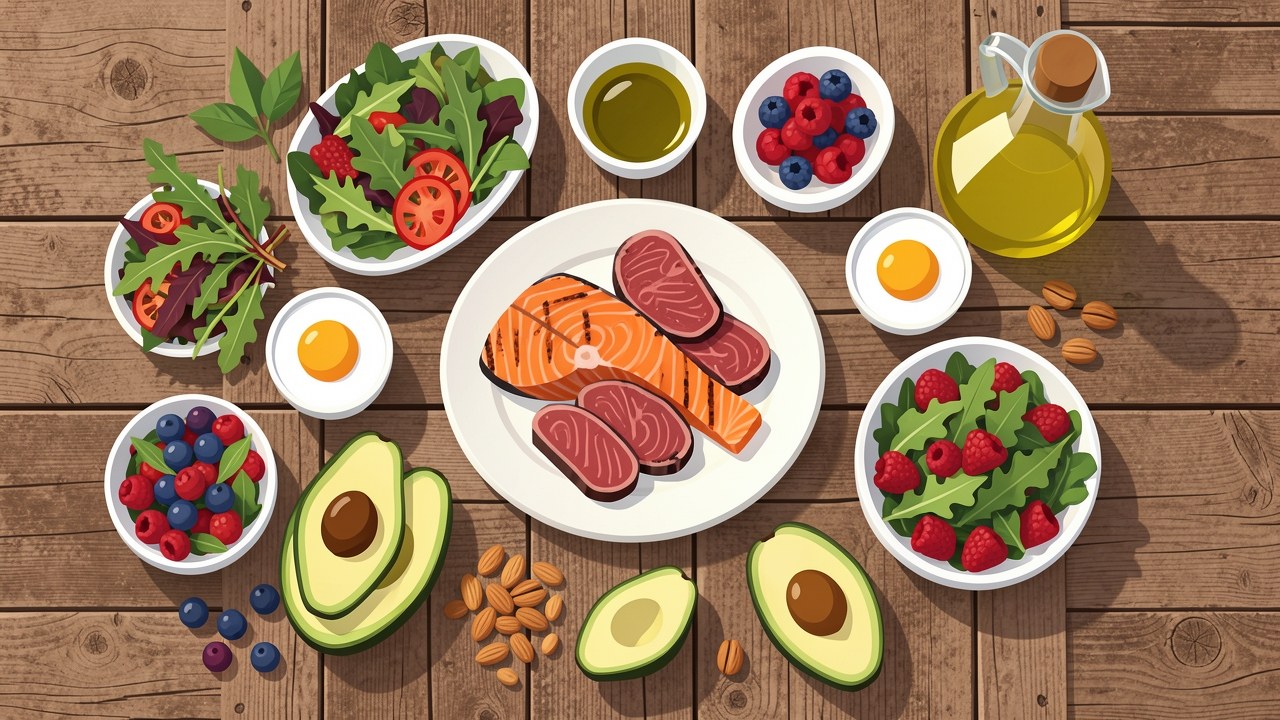
What is the paleo diet?
The paleo diet, short for Paleolithic diet, is a way of eating that aims to mirror the presumed diet of early humans before agriculture. It emphasizes lean meats, fish, eggs, vegetables, fruits, nuts, and seeds, while excluding processed foods, grains, legumes, and dairy.
The modern version of this diet dates back to 1975, when Walter L. Voegtlin published 'The Stone Age Diet.' It gained widespread popularity after Loren Cordain published 'The Paleo Diet' in 2002. Today, many people adopt it for weight management or overall health.
The diet is based on the idea that human genetics have not fully adapted to agricultural foods such as grains, legumes, and dairy, and that this mismatch may contribute to modern chronic diseases. However, this premise is debated, as ancient human diets varied widely by region and season.
Sources: StatPearls Publishing, Mayo Clinic
Core principles and food rules
The paleo diet revolves around a simple rule: eat foods that could have been hunted or gathered during the Paleolithic era. That means plenty of animal protein, fresh produce, nuts, and seeds, while avoiding foods that became common after farming began.
The framework is not rigid; some people choose variations, but the core list is usually consistent. Here is a quick breakdown of what is typically included and excluded.
- Eat: lean meats, poultry, fish, eggs, vegetables, fruits, nuts, seeds, and healthy oils (such as olive, coconut, or avocado oil).
- Avoid: grains (wheat, oats, rice), legumes (beans, lentils, peanuts), dairy products (milk, cheese, yogurt), refined sugar, processed foods, and salt.
- Focus: whole, unprocessed choices.
Sources: StatPearls Publishing, Mayo Clinic
Health benefits and scientific evidence
Research on the paleo diet shows some promising short-term effects, but the evidence is not as robust as many people believe. Several short-term randomized controlled trials—usually lasting 12 weeks or less—suggest that a paleo diet may improve fat mass, insulin sensitivity, and blood sugar control in people with type 2 diabetes.
A review of four randomized controlled trials concluded that the diet significantly decreased waist circumference, triglycerides, and blood pressure. However, it did not show a significant effect on HDL cholesterol or fasting blood sugar.
One large observational study in Spain found that a self-reported paleo pattern was linked to lower cardiovascular risk factors in young adults, but the benefit seemed to come mostly from avoiding processed foods and eating more fruits and vegetables, not from the diet's unique restrictions.
Long-term data are scarce. Most clinical studies are small, short-term, and use different definitions of the diet, making it hard to draw reliable conclusions about lasting benefits.
Sources: Mayo Clinic, UC Davis Department of Nutrition, Harvard T.H. Chan School of Public Health
Risks
The paleo diet is not without potential downsides. Because it excludes whole grains, legumes, and dairy, it removes foods that are good sources of fiber, calcium, vitamin D, and other important nutrients. This can raise the risk of nutrient deficiencies, such as iodine, thiamin, riboflavin, and iron.
Eliminating dairy and reducing salt may increase the risk of iodine deficiency. Without careful planning, a paleo pattern might also fall short on calcium and vitamin D, which are vital for bone health, possibly raising the risk of osteoporosis or osteopenia over time.
The diet can also be more expensive than a typical balanced diet, since grass-fed meat, wild game, and nuts often cost more than grains, legumes, and dairy.
Experts also point out that the diet's evolutionary premise is not universally accepted. Human evolution was driven by survival and reproduction, not by preventing chronic disease, and ancient diets were highly variable. For example, some hunter-gatherer groups consumed legumes and cereals.
Additionally, the lack of long-term research means that any potential long-term health benefits or risks remain unknown.
- Key nutrient shortfalls: fiber, vitamin D, calcium, iodine, thiamin, riboflavin, iron.
- Bone health: low calcium and vitamin D intake may increase risk of bone demineralization.
- Cost: grass-fed meats and nuts can strain your budget.
- Evidence gap: small, short-term studies with varied diet definitions limit conclusions.
Sources: StatPearls Publishing, Mayo Clinic, UC Davis Department of Nutrition, Harvard T.H. Chan School of Public Health
How to start paleo safely
If you decide to try the paleo diet, the key is to plan ahead so you can still meet your nutrient needs. Because the diet restricts several food groups, it is wise to consult a healthcare professional or a registered dietitian before making significant changes.
Start by filling your plate with approved foods that are also nutrient-dense: leafy greens, colorful vegetables, fatty fish, lean meats, and nuts. Pay extra attention to getting enough calcium and vitamin D, which are abundant in dairy, by choosing non-dairy sources like canned fish with bones, leafy greens, and fortified plant milks if you are willing to include them.
Also watch your iodine intake, as limiting dairy and salt may reduce it. You can get iodine from seaweed or iodized salt, but talk to your doctor if you have thyroid concerns.
Finally, be realistic about cost. Meal planning and buying in bulk can help. However, the paleo diet may not necessarily be healthier than other balanced eating patterns, such as the Mediterranean diet, which are also recommended by major health organizations.
- Consult a healthcare provider or dietitian first.
- Emphasize nutrient-dense approved foods.
- Plan to get enough calcium, vitamin D, and iodine without dairy.
- Be aware that the diet may cost more than a typical balanced diet.
Sources: StatPearls Publishing, UC Davis Department of Nutrition, Harvard T.H. Chan School of Public Health
Frequently asked questions
Is the paleo diet heart-healthy?
Some short-term studies suggest the paleo diet can lower waist circumference, triglycerides, and blood pressure, which are factors related to heart health. However, its impact on HDL cholesterol is not significant, and long-term cardiovascular outcomes are unknown. A large observational study linked a paleo pattern to lower cardiovascular risk, but the benefit seemed tied to avoiding processed foods and eating more fruits and vegetables. Because the paleo diet may also increase saturated fat intake from meat, whether it is heart-healthy in the long run is not yet clear.
Sources: Mayo Clinic, UC Davis Department of NutritionCan you eat dairy on paleo?
No, dairy is excluded from the traditional paleo diet. Milk, cheese, yogurt, and butter are avoided because they come from domesticated animals and were not part of early human diets. If you follow paleo strictly, you will need alternative sources of calcium and vitamin D, such as leafy greens, canned fish with bones, and possibly fortified plant-based milks if you choose to include them.
Sources: StatPearls Publishing, Mayo ClinicIs paleo expensive?
It often is. The paleo diet emphasizes animal foods like grass-fed meat and wild game, as well as nuts and fresh produce, which tend to cost more than staple foods like grains, legumes, and dairy. A 2025 medical reference and the Mayo Clinic both note this potential cost issue. If cost is a concern, you can look for sales, buy in bulk, or choose more affordable protein sources like eggs and canned fish.
Sources: StatPearls Publishing, Mayo ClinicWhat are the long-term effects of paleo?
The long-term effects are not well understood. Most research on the paleo diet is short-term, with studies lasting only a few months, and there is little data on what happens after years of following it. While the diet may help with weight loss and blood sugar control in the short term, concerns remain about potential nutrient deficiencies—like calcium, vitamin D, and iodine—which could affect bone health over time. Because of the lack of long-term clinical trials, the long-term benefits and risks remain unknown.
Sources: StatPearls Publishing, Mayo ClinicSources
- Paleolithic Diet - StatPearls - NCBI Bookshelf - NIH — StatPearls Publishing
- Paleo diet: What is it and why is it so popular? — Mayo Clinic
- The Paleo Diet — UC Davis Department of Nutrition
- Diet Review: Paleo Diet for Weight Loss - The Nutrition Source — Harvard T.H. Chan School of Public Health